You can picture it clearly.
Late summer evenings. A table set for dinner. Bare feet on warm stone. Maybe a fire feature glowing while the wind moves in from the water.
But when it’s time to choose materials, the confidence fades.
There are too many options. Too many opinions. Too many price points.
And underneath it all is one quiet fear:
What if I choose wrong?
At Clean Slate Landscape & Construction, we’ve walked alongside countless homeowners navigating this exact decision. If you’re considering a custom patio build in Cape Cod, here’s how to choose materials that feel right now—and still feel right years from now.
1. Start With How You’ll Actually Use the Space
Before you look at color swatches or stone samples, pause.
Picture a normal Saturday in your life.
Are you hosting big family cookouts? Quiet mornings with coffee? Neighbors dropping by? Kids running through sprinklers? Heavy outdoor furniture? A hot tub?
Your patio material needs to match your lifestyle.
For example:
- Textured pavers offer traction for wet feet.
- Smooth stone creates a refined look for entertaining.
- Larger format slabs create a clean, modern feel.
- Smaller pavers allow for intricate patterns and curves.
We always tell clients: design for your real life, not your Pinterest board.
Because the best patios don’t just look beautiful—they function beautifully.
2. Respect Cape Cod’s Climate
Cape Cod is stunning. It’s also demanding.
Salt air corrodes.
Moisture lingers.
Freeze-thaw cycles shift surfaces.
Sand finds its way into everything.
Material choice isn’t just aesthetic here—it’s structural.
Natural stone like bluestone or granite offers timeless character and durability when installed correctly. High-quality interlocking pavers provide flexibility, allowing slight ground movement without cracking. Properly poured and reinforced concrete can perform well—but base preparation and drainage are critical.
Here’s what matters most:
Even premium materials will fail without proper installation.
A strong compacted base. Correct grading. Thoughtful drainage planning. Edge restraints that hold everything in place.
Materials and craftsmanship must work together. One without the other doesn’t last.
3. Understand the Maintenance Commitment
Every material tells a different long-term story.
Some homeowners love the evolving character of natural stone. It weathers. It softens. It becomes part of the landscape.
Others want crisp, clean lines year after year.
Ask yourself:
- Am I willing to reseal surfaces periodically?
- Do I want to power wash seasonally?
- Am I comfortable replacing polymeric sand in joints if needed?
- Do I want something that requires minimal upkeep?
There’s no wrong answer. Only the right fit for you.
The mistake happens when expectations don’t match reality.
4. Think Beyond the Sample Board
A 6-inch material sample can’t show you everything.
Color variation.
Joint spacing.
Texture in full sunlight.
How it feels underfoot.
How it looks after two winters.
When we guide homeowners through this process, we encourage them to look at completed projects—not just showroom pieces.
Stand on a finished patio.
Notice the layout.
See how the materials age.
Feel the difference between a well-prepared base and a rushed one.
That’s where clarity happens.
5. Align the Patio With Your Home’s Architecture
A patio should feel like it belongs.
A traditional Cape Cod home often pairs beautifully with natural stone or classic-toned pavers. Coastal properties may benefit from lighter colors that reflect heat. Contemporary homes might lean toward larger slabs or geometric patterns.
When materials align with the style of your home, the entire property feels cohesive.
It stops looking like an addition.
It starts feeling intentional.

6. Factor in Drainage and Site Conditions
This is the part homeowners rarely think about—but it’s critical.
Is your yard sloped?
Does water pool after storms?
Is the soil sandy or clay-heavy?
How close is the patio to your foundation?
Material choice must work with your property’s natural conditions.
For example:
- Areas prone to movement benefit from flexible paver systems.
- Low spots may require additional base depth or drainage solutions.
- Larger stone pieces need careful leveling and stabilization.
If this step is overlooked, even the most beautiful patio can shift, sink, or collect water.
The best materials won’t save a poorly prepared foundation.
7. Consider Long-Term Value (Not Just Upfront Price)
It’s tempting to choose the lowest bid.
But patios are long-term investments.
Lower-cost materials may:
- Fade faster.
- Chip or crack.
- Require more frequent maintenance.
- Lack the structural strength needed for coastal conditions.
We’ve met homeowners who had to redo patios within five years because the original installation cut corners.
That’s not savings. That’s stress.
Quality materials paired with experienced installation protect both your investment and your peace of mind.
And in a competitive real estate market like Cape Cod, a well-built patio adds real value.
8. Ask About Base Preparation
This is where the real difference happens.
Under every patio is a carefully layered system:
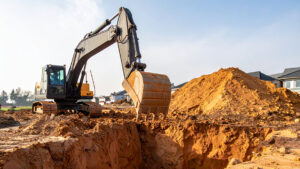
- Excavation to the proper depth
- Compacted gravel base
- Bedding layer
- Edge restraints
- Joint stabilization
If a contractor can’t clearly explain their base preparation process, that’s a red flag.
A patio isn’t just what you see.
It’s what’s underneath.
Think of it like a house foundation. Invisible—but everything depends on it.
9. Balance Trend With Timelessness
Trends change quickly.
Your patio shouldn’t.
Neutral tones, classic patterns, and natural materials tend to age more gracefully than bold color experiments.
That doesn’t mean you can’t add personality. You absolutely can—through furniture, planters, lighting, or accent features.
But the foundation?
That should feel solid and timeless.
10. Choose a Team That Educates You
You shouldn’t feel rushed.
You shouldn’t feel confused.
You shouldn’t feel like you’re guessing.
The right team explains not just what they recommend—but why.
When you understand the reasoning behind material choices, installation methods, and long-term care, you make decisions confidently.
And confidence feels different.
It feels steady.
Frequently Asked Questions
How do I know which material will last the longest?
Longevity depends on both material quality and installation. Natural stone and high-grade interlocking pavers tend to perform well in coastal climates when installed on a properly compacted base with good drainage. Always ask about both material specs and installation methods.
Are pavers better than poured concrete?
It depends on your goals. Pavers offer flexibility and easier repair if shifting occurs. Concrete can provide a smooth, modern look but may crack in freeze-thaw conditions if not reinforced correctly. The right choice depends on your site conditions and aesthetic preference.
Will salt air damage my patio?
Over time, salt air can affect certain materials—especially lower-quality concrete or metal components. Choosing materials suited for coastal environments and applying proper sealing when needed helps protect your investment.
How much maintenance should I expect?
Most patios benefit from occasional cleaning and inspection. Pavers may need joint sand refreshed over time. Natural stone may require periodic sealing depending on the type. Ask your contractor for a clear maintenance outline before installation.
Can I add features later like a fire pit or outdoor kitchen?
It’s best to plan for future additions during the initial build. Proper base preparation and load considerations can be factored in early, making upgrades easier and more cost-effective later.
How long does installation typically take?
Project timelines vary based on size, material, and site conditions. Smaller patios may take several days, while larger or more complex designs can take longer. Weather also plays a role—especially in coastal climates.
What’s the biggest mistake homeowners make?
Rushing the decision.
Choosing based only on price.
Or skipping questions about what’s beneath the surface.
The most successful projects happen when homeowners slow down and ask thoughtful questions about materials, preparation, and long-term performance.
Your Backyard Should Feel Like a Reward—Not a Regret
Choosing the right materials isn’t about memorizing options.
It’s about aligning your lifestyle, your home, and Cape Cod’s climate with craftsmanship that lasts.
When those pieces come together, your patio becomes more than stone and sand.
It becomes where birthdays happen. Where conversations stretch longer than expected. Where ordinary evenings feel a little extraordinary.
If you’re ready to move from researching to building, we’re here to guide you with clarity and care.
Call 888-912-6706 or explore our patio design and construction services to learn more about our Patio Installation services in Cape Cod.