A retaining wall should feel solid long before the last stone is placed. It should feel dependable — the kind of structure you never have to second-guess during a heavy storm or a harsh winter.
At Clean Slate Landscape & Construction, quality isn’t something we talk about at the end of a project. It’s something we build into every step from the very beginning.
Many homeowners first discover our team while researching solutions for a shifting slope or aging landscape feature and exploring our Cape Cod retaining wall construction team. What they’re usually searching for isn’t just a contractor.
They’re looking for confidence.
Because once you’ve seen a wall lean, crack, or fail, you realize how much the details matter.
It Starts With Understanding the Land
Every property has its own story.
Some have gentle slopes that slowly pull soil downhill year after year. Others sit on coastal terrain where drainage and soil stability change with the seasons. In many Cape Cod homes, older landscaping decisions also influence how water moves through the yard.
That’s why no project begins with a template.
Instead, we begin by studying the property itself. Our team evaluates the slope, drainage patterns, soil composition, and surrounding structures. We also talk with homeowners about how they use the space.
Maybe they want a safer yard for their children.
Maybe they want a garden terrace that makes maintenance easier.
Or maybe they simply want to protect their home from erosion.
These conversations shape every decision that follows.
The Work You Don’t See Matters Most
One of the biggest misconceptions about outdoor masonry is that the visible materials determine the strength of the wall.
In reality, what lies beneath the surface matters far more.
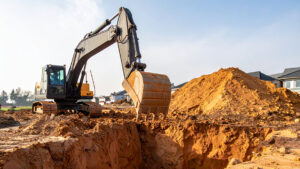
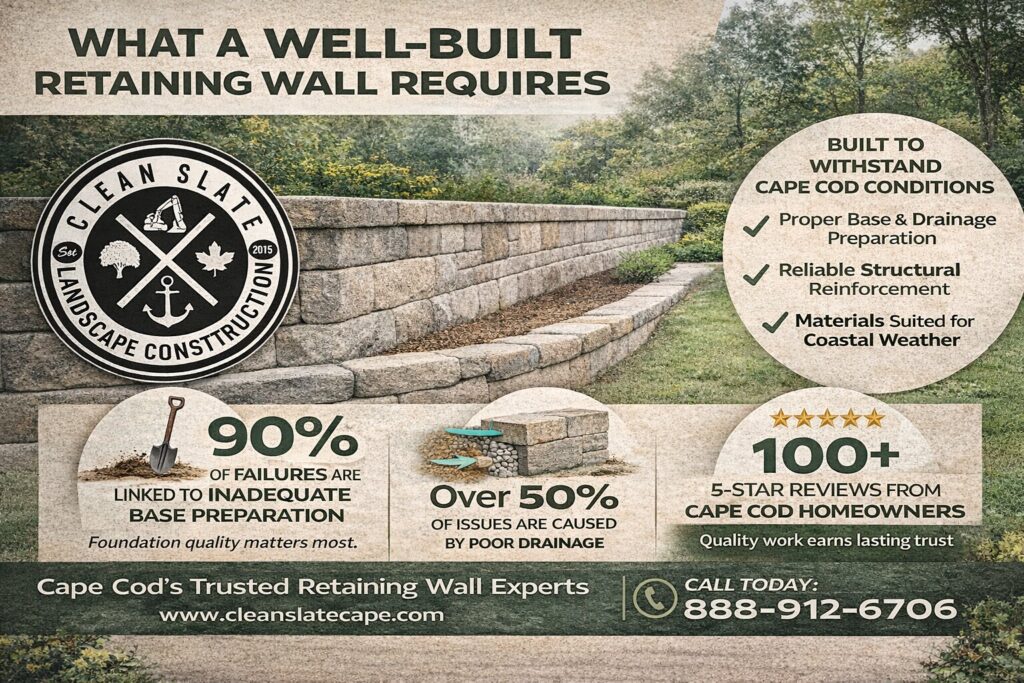
Proper excavation, base preparation, compaction, and drainage systems form the true foundation of a lasting structure. Without these elements, even the most beautiful stonework can slowly shift under pressure.
Cape Cod weather only increases this risk.
Freeze–thaw cycles expand and contract the soil. Heavy rainfall tests drainage systems. Over time, poor preparation can lead to cracks, leaning walls, or soil washout.
That’s why our retaining wall construction process prioritizes the structural layers below the surface before the visual work even begins.
When these early steps are done carefully, the wall above them becomes far more reliable.
Craftsmanship That Reflects Years of Experience
Good construction isn’t rushed.
It’s measured, methodical, and attentive to small adjustments along the way.
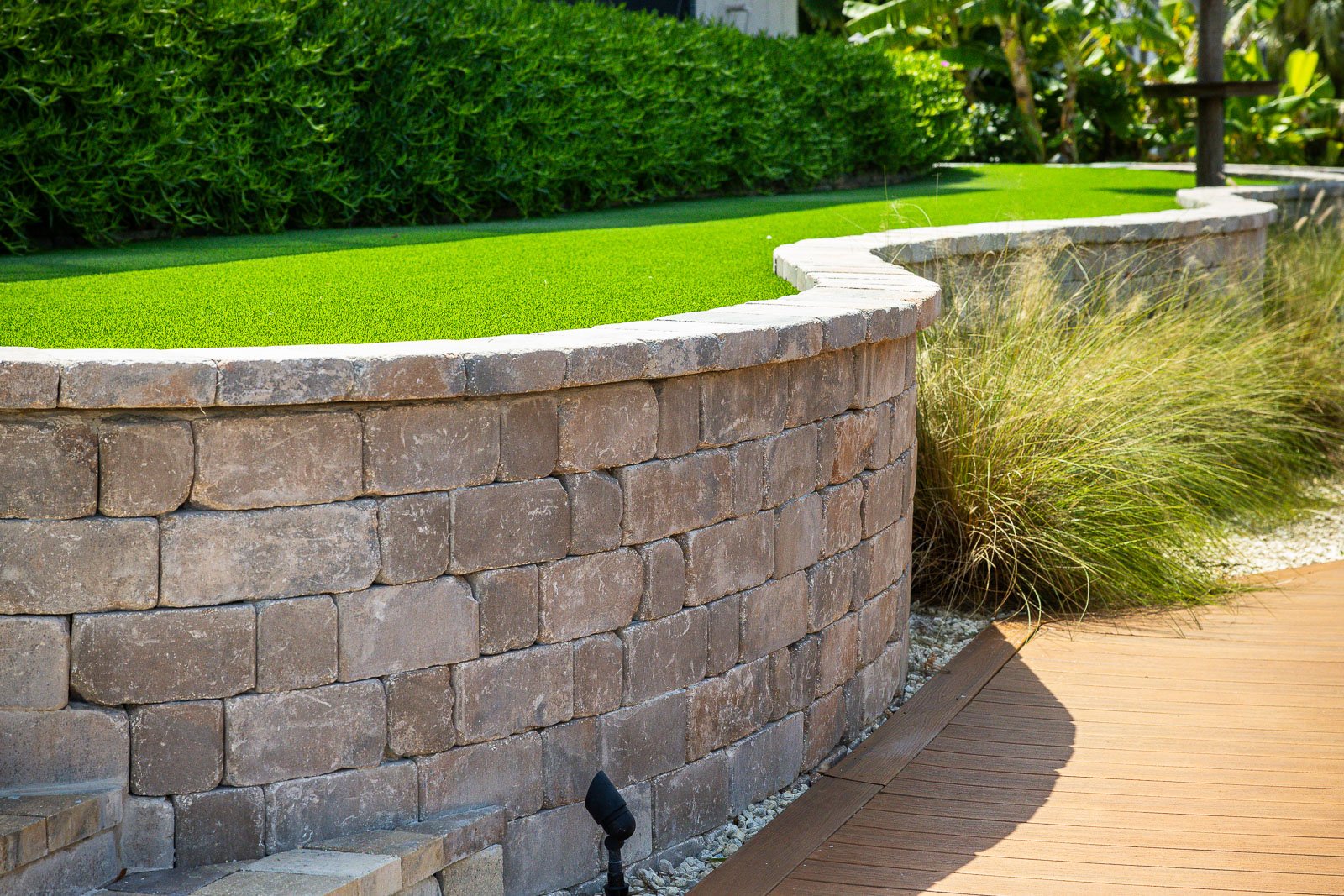
Our team takes pride in the craftsmanship behind every project — from precise stone placement to carefully aligned courses that create a balanced, natural appearance.
While the structural integrity of a wall is essential, the finished result should also enhance the beauty of the property.
That means paying attention to:
- Stone alignment and joint spacing
- Natural transitions between landscape levels
- Consistent edges and smooth visual flow
- Materials that complement the surrounding environment
When these details are done right, the wall doesn’t feel like a separate structure. It feels like part of the landscape itself.
A Story That Happens More Often Than You’d Think
Many homeowners reach out to us after experiencing problems with an existing wall.
Sometimes the issue appears slowly — a slight tilt or small crack that grows more noticeable each year. Other times the change is sudden, especially after a severe storm or heavy winter.
We often hear a similar story.
A homeowner invested in a project years ago expecting it to last. At first, everything looked perfect. But over time, small structural shortcuts began to reveal themselves.
Water started collecting behind the wall. Soil pressure increased. Eventually, the structure began to move.
One homeowner told us:
“It looked great at first, but we realized the problem wasn’t the stone. It was everything underneath.”
After rebuilding the structure properly with drainage and reinforcement, the difference wasn’t just visual. It was emotional.
The worry disappeared.
Designed to Withstand Cape Cod Conditions
Building near the coast requires a different level of planning.
Cape Cod landscapes experience environmental conditions that can stress outdoor structures over time. Strong winds, salty air, seasonal storms, and fluctuating temperatures all play a role.
Our team considers these factors when selecting materials and planning each project.
Drainage systems are designed to manage heavy rainfall. Structural reinforcement helps resist soil pressure during freeze–thaw cycles. Materials are chosen for both durability and compatibility with the surrounding environment.
This approach ensures the finished wall doesn’t simply survive the seasons — it continues performing year after year.
A Partnership With Every Homeowner
One of the most important aspects of quality construction is communication.
Homeowners deserve to understand what’s happening on their property and why certain decisions are being made. Our team explains the process clearly, from preparation to final installation.
Questions are encouraged. Adjustments are discussed openly. And timelines are shared so homeowners know what to expect.
Construction projects can sometimes feel overwhelming. Our goal is to make the experience feel organized, transparent, and respectful of your home.
When the project is finished, homeowners should feel not only satisfied with the result but confident in how it was built.
The Value of Doing It Right the First Time
A well-built wall offers more than visual appeal.
It protects your landscape from erosion.
It stabilizes sloped areas of your yard.
It creates usable outdoor space for patios, gardens, and walkways.
Most importantly, it removes uncertainty.
Homeowners shouldn’t have to wonder whether a wall will hold through the next heavy rain or winter freeze. Quality construction eliminates that concern.
Because when something is built with care, it becomes part of the property’s long-term stability.
That’s the quiet confidence we aim to deliver with every project.
Frequently Asked Questions
How long should a properly built retaining wall last?
A professionally constructed wall can last several decades when installed with proper base preparation and drainage. The exact lifespan depends on materials, soil conditions, and environmental factors.
What are common signs that an existing wall may be failing?
Some warning signs include:
- Leaning or bowing sections
- Cracks forming between stones or blocks
- Soil washing out behind or beneath the wall
- Water pooling near the base
- Loose or shifting materials
If you notice any of these changes, it’s best to have the structure evaluated before the issue worsens.
Why is drainage so important behind a wall?
Water buildup is one of the most common causes of structural failure. Without proper drainage, pressure builds behind the structure and can push it outward over time.
Drainage systems allow water to flow safely away, reducing stress on the wall.
Can a damaged wall be repaired, or does it need replacement?
Some minor issues can be repaired, especially if caught early. However, significant leaning, structural movement, or foundation failure may require partial or full reconstruction to ensure long-term safety.
How long does a typical wall project take?
Project timelines vary depending on the size of the structure, site preparation requirements, and weather conditions. Smaller projects may take a few days, while larger landscape installations can take several weeks.
What materials are commonly used for landscape walls?
Common options include natural stone, concrete blocks, and modular systems designed for structural support. Material selection often depends on the property’s design, slope, and aesthetic preferences.
Call 888-912-6706 or visit our retaining wall construction services in Cape Cod to learn more about our Retaining Wall Construction services in Cape Cod.