Masonry work done wrong doesn’t fail immediately. It fails two winters later when the frost gets in, the water expands, and you’re watching a stone wall slowly come apart. At that point, you’re paying to fix someone else’s mistake.
On Cape Cod, masonry is harder than it is inland. The salt air, the freeze-thaw cycles, the sandy soil – they all stress the materials in ways that a contractor without local experience might not account for. This guide covers what Cape Cod masonry actually involves, how to vet a contractor, and what separates work that lasts from work that doesn’t.
What Cape Cod Masonry Actually Involves
Masonry is any construction that uses stone, brick, concrete block, or similar materials set with mortar or dry-laid. On Cape Cod homes, that covers a lot of ground:
Walkways and stairs – bluestone, granite, brick, or concrete pavers set on a compacted base. The surface you walk on from your car to your front door, or from your back door down to the yard.
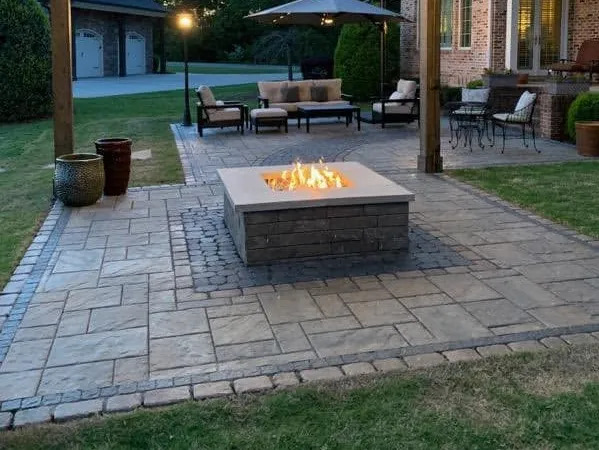
Patios – outdoor living surfaces, usually 200-600 square feet, set in sand or mortar on a gravel base. This is the most common masonry project on Cape Cod.
Retaining walls – walls that hold back soil on sloped properties. Especially common on the Cape, where coastal properties often have grade changes and erosion pressure from wind and water.
Cobblestone aprons – the transition area between the street and your driveway, traditionally done in cobblestone or granite. Very common on older Cape Cod properties.
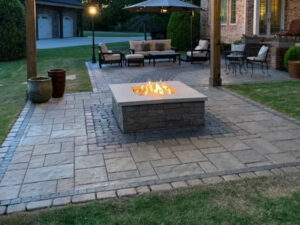
Custom stone structures – outdoor fireplaces, fire pits, planters, steps, and garden walls. These are more involved and require a mason who can design as well as build.
Why Cape Cod’s Environment Is Hard on Masonry
This is where most out-of-area contractors get tripped up.
Freeze-thaw cycles. From November through March, Cape Cod sees repeated cycles where temperatures drop below freezing at night and warm up during the day. Any moisture that gets into cracks or behind stones freezes, expands, and pushes. Over a few seasons, this breaks apart walls and heaves patios. The fix is proper drainage, deep-set bases, and the right mortar mix – not just any mortar mix.
Salt air. Within a mile or two of the ocean – which is most of Cape Cod – salt air accelerates corrosion and deterioration of metals and some masonry materials. Steel rebar, for example, corrodes faster in salt air environments. A good Cape Cod mason uses stainless steel hardware, seals exposed surfaces appropriately, and chooses stone that holds up in coastal conditions.
Sandy soil. Cape Cod soil is mostly glacial sand. It drains fast, which is good. But it also shifts and settles more than clay-heavy soil. A patio or wall base that’s built to inland standards will move on the Cape. You need a deeper, more heavily compacted gravel base to keep things stable.
How to Vet a Cape Cod Mason: 6 Things to Check Before You Commit
1. Do they have local project references? Ask specifically for Cape Cod or Plymouth County projects. Drive by if you can. A contractor who’s been working the area should have no shortage of completed work to show you.
2. Do they pull permits? Some masonry work on Cape Cod – particularly retaining walls over a certain height – requires a permit. A contractor who suggests skipping permits is cutting corners, and the liability falls on you as the homeowner.
3. Do they describe their base preparation? Any masonry contractor worth hiring will talk about base depth, gravel type, and compaction before they talk about aesthetics. If the first thing out of their mouth is “what stone do you like,” ask them to back up and explain how they prepare the ground.
4. Are they licensed and insured in Massachusetts? This is non-negotiable. Ask for certificates of insurance before any work starts.
5. Do they put everything in writing? Scope of work, materials, timeline, warranty terms. All of it. No exceptions.
6. Do they warranty their work? A reputable mason will come back and address settlement, cracking, or failure in the first year. Get the warranty terms in writing.
Common Masonry Mistakes on Cape Cod Homes
Shallow base preparation. The most common failure mode. Pavers or stone laid on 3 inches of base may look fine in summer. By spring, they’ve heaved.
Wrong mortar mix. Not all mortar is formulated for freeze-thaw climates. A contractor using standard mortar in a coastal freeze-thaw environment is setting up the job to fail.
No drainage plan. Water behind a retaining wall has to go somewhere. Without drainage (gravel backfill, weep holes, or a French drain), it builds up, freezes, and pushes the wall out.
Skipping the sealer. Certain stones – particularly limestone and some bricks – absorb moisture readily. On Cape Cod, that moisture freezes and spalls the surface. A quality sealer extends the life of the installation significantly.
What Clients Say About Our Cape Cod Masonry Work
“These guys are the real deal! Very professional, leave a clean work site and finished product came out amazing! Would recommend to anyone looking for hardscape/landscaping!” – Chris B., Falmouth, MA
“Clean Slate is my go-to for all my landscape/masonry needs. Their work is impeccable, timely, and affordable.” – Kyle L., Kingston, MA
“Can not speak highly enough of Paul and the team at Clean Slate. We have used them for 2 jobs at our house and are currently undergoing project #3.” – Keith S., Plymouth, MA
Get a Free Masonry Estimate on Cape Cod
Clean Slate Landscape Construction has been building masonry services on Cape Cod and Plymouth County for over 15 years. We know this environment – and we build for it.
Call (888) 912-6706 or request a free estimate online. We’ll visit your property, walk through what you’re looking for, and give you a detailed quote.