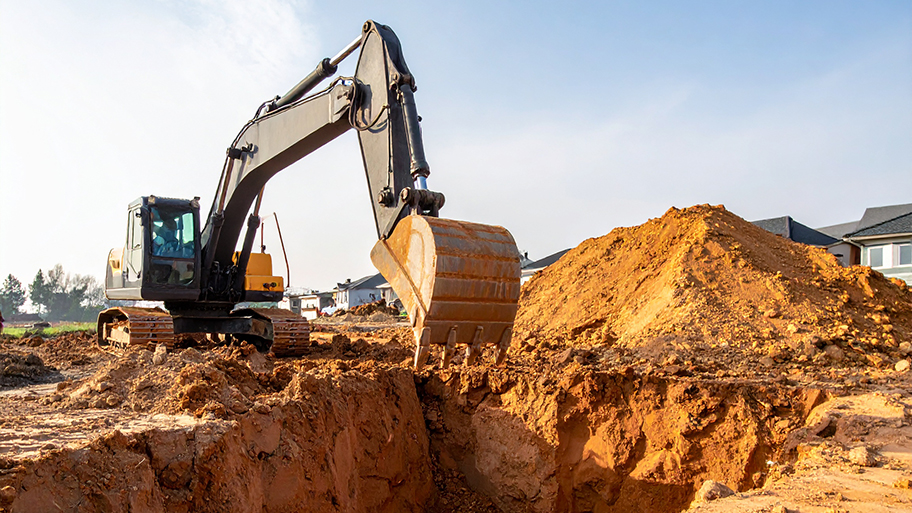
Excavation is usually the first step in any major outdoor project, and it’s often the one homeowners budget least carefully. The problem: excavation costs on Cape Cod vary widely depending on what you’re moving, how deep you’re going, what’s in the way, and what the soil conditions are.
Here’s a real breakdown – by project type – based on what excavation work actually costs on the Cape.
Excavation Cost by Project Type on Cape Cod
Residential Grading and Leveling
Range: $1,500 – $6,000
Regrading a residential lot – leveling uneven ground, correcting slope for drainage, or preparing a site for a new landscape installation – typically runs $1,500-$3,500 for a standard residential property. Larger lots, significant grade changes, or properties with difficult access run higher.
Drainage Excavation
Range: $2,000 – $8,000
Installing a French drain, dry well, or catch basin requires excavating a trench or pit, installing drainage materials, and backfilling. A single French drain (40-60 feet) runs $2,000-$4,000. More complex systems covering larger areas run $5,000-$8,000+.
Foundation Excavation
Range: $5,000 – $20,000+
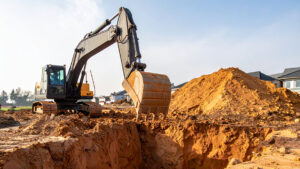
Excavating for a new foundation – for an addition, garage, or accessory structure – is a more involved project. Depth, square footage, and whether blasting or special equipment is needed all affect cost significantly. On Cape Cod, sandy soil is generally easier to excavate than rock-heavy inland sites, but coastal proximity may add permitting complexity.
Land Clearing
Range: $1,500 – $8,000 per acre
Clearing trees, stumps, and brush varies enormously based on vegetation density. Light clearing runs $1,500-$3,500/acre. Heavy clearing with large trees and stump grinding runs $5,000-$8,000+/acre.
Pool Excavation
Range: $1,500 – $5,000
Standalone pool excavation runs $1,500-$3,500 for a standard residential pool, more for larger or oddly-shaped excavations or difficult access.
Why Excavation Costs More on Cape Cod
Sandy soil works in your favor – usually. Cape Cod’s glacial soil is mostly sandy loam, which is easier to excavate than clay-heavy or rocky soil. This actually keeps some excavation costs lower than inland Massachusetts.
But site access is often the challenge. Many Cape Cod properties have limited access – narrow driveways, low tree canopies, tight lot lines. Getting equipment in and out takes longer and may require smaller, more expensive machinery.
Permitting near water. Much of Cape Cod falls within coastal overlay zones or near wetlands. Any excavation near these areas requires additional permitting – conservation commission approval in most towns.
Disposal costs. Excavated material has to go somewhere. Disposal fees at licensed facilities add to the overall project cost.
5 Things That Can Increase Your Excavation Cost
- Difficult equipment access – narrow gates, low branches, or tight lot lines requiring compact equipment
- Unexpected rock or debris – ledge, old foundations, or buried debris that only shows up once digging starts
- High water table – some Cape Cod properties near ponds or the shoreline require dewatering during excavation
- Permitting delays – projects requiring conservation commission approval can add weeks to the timeline
- Disposal requirements – certain soil types may require testing and licensed disposal
What’s Included in a Clean Slate Excavation Quote
Our excavation services use state-of-the-art equipment operated by an experienced team that knows Cape Cod’s soil conditions and local permit requirements. Our written quotes cover scope of excavation, equipment and crew, disposal of excavated material, timeline, and any required permitting.
Get a Free Excavation Estimate on Cape Cod
Call (888) 912-6706 or book a free estimate online. We’ll walk your site, assess what’s needed, and give you a detailed written quote.
Frequently Asked Questions
How long does excavation take on a typical Cape Cod property?
For most residential projects – grading, drainage installation, or site prep – expect 1-3 days of active work. Foundation excavation or large clearing projects take longer.
Do I need a permit for excavation on Cape Cod?
It depends on the location and scope. Work near wetlands, within the coastal zone, or in flood-designated areas almost always requires permitting.
What happens to the excavated material?
Clean fill can sometimes be repurposed on-site or offered to other property owners. Mixed or contaminated material goes to a licensed disposal facility at additional cost.