Sometimes the hardest part of upgrading a backyard isn’t the construction.
It’s the decision.
You start researching options, comparing photos, reading opinions online—and suddenly it feels like every homeowner, contractor, and blog has a completely different answer.
Concrete looks simple and affordable.
Pavers look beautiful and customizable.
Both seem like good choices, and that’s exactly what makes the decision feel overwhelming.
If you’re stuck between the two, you’re not alone. Many homeowners reach this same crossroads when planning an outdoor space. Looking at options like custom outdoor patio solutions often helps clarify how each material behaves in real environments.
The truth is this: there isn’t a single “right” answer for every yard.
But there are a few things professionals consistently see over time that homeowners rarely hear during the early research phase.
Why This Decision Feels So Overwhelming
Outdoor projects come with a unique kind of pressure.
You’re not just choosing a material—you’re shaping a part of your home that people will see, use, and experience for years.
And unlike furniture or paint colors, outdoor surfaces aren’t something most homeowners want to replace anytime soon.
That’s why people tend to worry about questions like:
- Will this crack later?
- Will it still look good in 10 years?
- Will maintenance become a hassle?
- Did I choose the wrong material?
Those concerns are completely normal. The good news is that both concrete and pavers can work beautifully when the project is designed and installed properly.
Understanding their differences simply helps you make a choice with confidence.
Concrete: Clean, Simple, and Often Budget-Friendly
Concrete is one of the most common outdoor surfaces for a reason.
It’s strong, relatively affordable, and can be installed fairly quickly compared to more detailed masonry work.
For homeowners looking for a smooth, simple surface, concrete often checks the basic boxes.
Some advantages include:
- Lower upfront cost
- Faster installation timeline
- Smooth, modern appearance
- Minimal early maintenance
Decorative techniques like stamping, coloring, or texturing can also add visual interest.
For certain properties, this simplicity works perfectly.
But like any material, it also has limitations that become more noticeable over time.
The Reality of Cracking Over Time
One thing many homeowners hear about concrete is that it can crack.
That doesn’t mean every concrete surface fails—but it does mean cracks are relatively common over long periods.
Outdoor surfaces are constantly exposed to pressure and movement:
- Soil shifting
- Temperature expansion and contraction
- Freeze–thaw cycles
- Heavy weight from furniture or foot traffic
Because concrete is one continuous slab, it has limited flexibility when the ground underneath moves.
Small cracks may appear gradually. Sometimes they remain minor. In other cases, they become more noticeable as the years pass.
Repairs are possible, but matching the original surface perfectly can be challenging.
Pavers: Flexible, Durable, and Highly Customizable
Pavers take a very different approach.
Instead of one large surface, they consist of many individual pieces carefully placed together over a prepared base.
This design changes how the surface behaves.
Because the pieces are separate, the overall structure can flex slightly when the ground shifts. That flexibility often helps prevent the kind of large cracks that can appear in solid slabs.
Pavers also offer significant design variety.
Homeowners can choose from many combinations of:
- Shapes
- Patterns
- Colors
- Textures
This allows the finished space to match the architecture of the home or the surrounding landscape.
For many people, that design flexibility is one of the biggest advantages.
Maintenance Looks Different for Each Option
Every outdoor surface requires some level of maintenance over time.
The type of maintenance is simply different between materials.
Concrete maintenance may include:
- Sealing the surface
- Addressing cracks
- Cleaning stains
- Repairing damaged sections
With pavers, maintenance tends to focus on the joints between pieces.
Common upkeep tasks include:
- Replacing joint sand
- Occasional resealing
- Adjusting individual stones if settling occurs
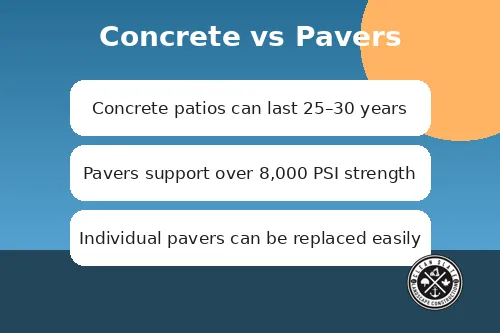
One advantage is that if a section becomes damaged, individual pavers can usually be removed and replaced without disturbing the entire surface.
That repair flexibility can extend the life of the overall space.
Design Possibilities Can Change the Feel of a Backyard
While durability and cost matter, design often plays a bigger role than people expect.
A backyard surface isn’t just a place to put furniture.
It becomes the foundation for gatherings, quiet evenings, and everyday outdoor living.
Concrete typically creates a clean, minimal look.
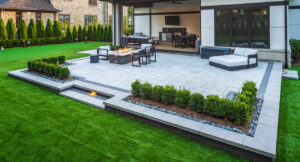
Pavers, on the other hand, allow for patterns that add visual interest and character.
For example:
- Herringbone layouts for classic style
- Running bond patterns for simplicity
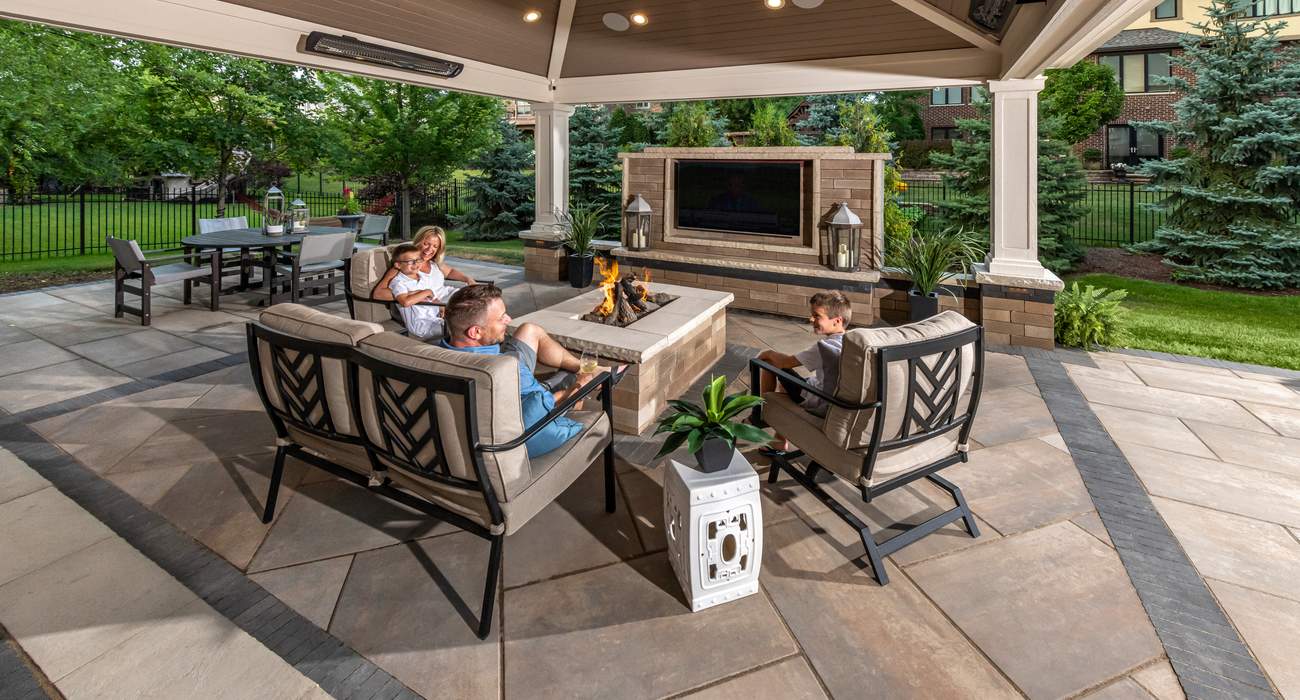
- Circular designs around fire pits
- Contrasting borders that frame the space
These subtle design choices can make a backyard feel intentional and inviting.
Sometimes the difference between a basic outdoor surface and a beautiful gathering space comes down to these small details.
Climate and Environment Matter More Than People Realize
Outdoor surfaces don’t exist in perfect conditions.
They face weather, soil movement, moisture, and seasonal changes year after year.
In coastal environments like Cape Cod, these factors can play an important role in material performance.
Salt air, temperature changes, and shifting soil conditions can gradually affect outdoor surfaces.
Because pavers allow for small adjustments and repairs, some homeowners prefer their adaptability in these environments.
That said, properly prepared concrete installations can also perform well when installed with careful planning.
This is why professional preparation—base layers, drainage, and grading—is often more important than the material itself.
Preparation Often Matters More Than the Material
One thing experienced professionals consistently emphasize is this:
The success of an outdoor surface depends heavily on what’s underneath it.
Proper base preparation includes:
- Excavating unstable soil
- Installing compacted base materials
- Creating drainage paths for water
- Ensuring level and stable foundations
Without these steps, even the best materials may struggle over time.
This is why many professionals approach Patio Installation as a full landscape system rather than simply laying stone or pouring concrete.
When the foundation is done correctly, both concrete and pavers can perform far better.
The Best Choice Is the One That Fits Your Property
Many homeowners search for a single “best” option.
But in reality, the best choice depends on factors like:
- Property layout
- Soil conditions
- Design goals
- Budget considerations
- Long-term maintenance preferences
Some homeowners prefer the simplicity and affordability of concrete.
Others appreciate the durability and design flexibility of pavers.
Both can create beautiful outdoor spaces when thoughtfully designed.
Sometimes the most helpful step is simply talking through your options with someone who understands how these materials behave over time.
Frequently Asked Questions
Are pavers always more expensive than concrete?
Pavers typically have a higher initial installation cost due to the labor involved in placing individual stones.
However, long-term repair flexibility can make them cost-effective over time depending on the situation.
Do pavers shift or move easily?
When installed properly with a stable base and edge restraints, pavers stay securely in place.
Minor adjustments can be made over time if settling occurs, which is one reason many homeowners appreciate them.
Does concrete always crack?
Not necessarily. Many concrete surfaces last for years with minimal issues.
However, because concrete is one continuous slab, cracks can develop if the ground beneath shifts or expands.
Which option lasts longer?
Both materials can last many years when installed correctly.
Pavers sometimes have an advantage because individual pieces can be replaced without rebuilding the entire surface.
Can pavers support heavy furniture or grills?
Yes. Properly installed paver surfaces are designed to support outdoor furniture, grills, and regular foot traffic.
They are commonly used in driveways as well, which experience even heavier loads.
Is one option better for resale value?
Outdoor living spaces of any kind tend to improve a home’s appeal.
Buyers often respond positively to well-designed backyard gathering areas regardless of the specific material used.
Choosing between materials doesn’t have to feel like a stressful decision.
With the right guidance and thoughtful design, either option can create an outdoor space where people gather, relax, and make memories.
Call 888-912-6706 or visit our Patio Installation services to learn more about our Patio Installation services in Cape Cod.