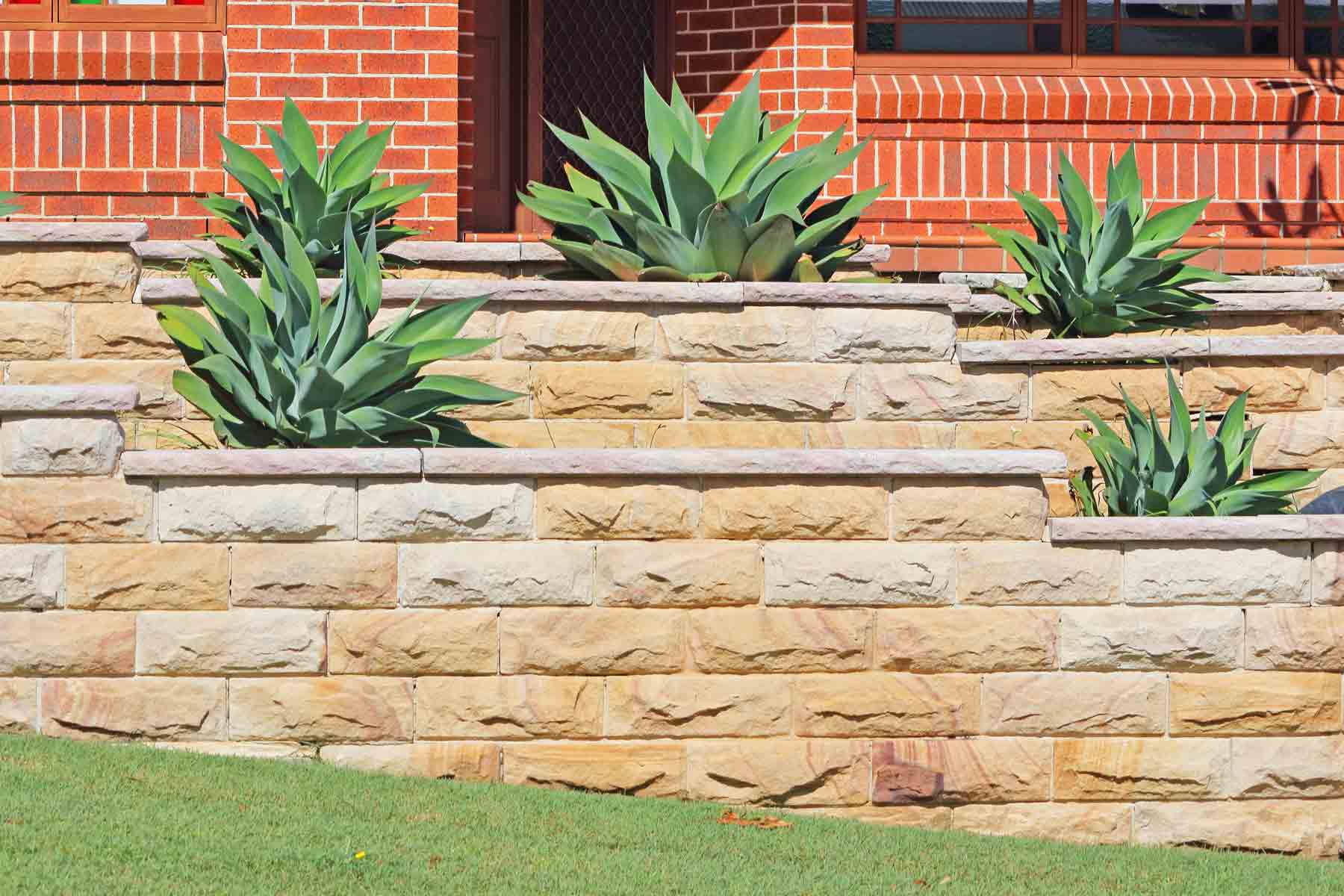
If you have a steep backyard in Mashpee, you may have asked yourself a frustrating question: Is this space ever going to be useful?
Maybe you’ve watched family members struggle to walk across it after rain. Maybe mowing feels like an extreme sport. Maybe you’ve simply stopped going into that part of the yard altogether.
You’re not alone. Many homeowners across Cape Cod purchase properties with beautiful views and unique landscapes, only to discover that steep grades create ongoing challenges. The good news is that a difficult slope doesn’t automatically mean you’re stuck with unusable outdoor space forever.
In many cases, homeowners can dramatically improve how their property functions through thoughtful landscape design, grading solutions, and features like retaining wall construction. Understanding your options is often the first step toward seeing your backyard differently.
Why a Steep Backyard Creates More Problems Than Most People Expect
At first glance, a sloped backyard may seem like a cosmetic issue.
In reality, steep grades affect nearly every aspect of how you use and maintain your property.
For many homeowners, the problems begin with accessibility. Walking across a steep incline can feel uncomfortable or unsafe, especially for children, older adults, and guests. During rainy periods, grass and soil can become slippery enough that people actively avoid the area.
Maintenance becomes another challenge. Mowing a steep slope is physically demanding and can even become dangerous depending on the grade. Landscaping projects that would be simple on flat ground often become more complicated and expensive.
Then there’s the issue of usability.
A large portion of your property may exist on paper, but if you can’t comfortably walk, sit, play, entertain, or garden there, it doesn’t feel like usable square footage.
Many homeowners describe it the same way: they feel like they’re paying for land they can’t actually enjoy.
Why Slopes Often Become More Slippery Over Time
One common misconception is that a steep backyard will simply stay the way it is.
Unfortunately, slopes often become more problematic as the years pass.
Rainwater naturally follows gravity. On steep terrain, water moves faster and carries soil along with it. Over time, this process can create erosion, bare patches, exposed roots, and uneven surfaces.
Cape Cod’s weather patterns can make this especially noticeable. Heavy storms can wash away topsoil while repeated freeze-thaw cycles gradually weaken unstable areas.
As grass coverage decreases, muddy conditions become more common.
The result is a cycle that many homeowners know all too well:
- Rain creates erosion
- Erosion damages vegetation
- Less vegetation means less soil stability
- Less stability creates more erosion
Without intervention, the slope can become progressively harder to maintain and use.
Can You Actually Make a Steep Backyard Flatter?
In many cases, yes.
However, “making it flatter” doesn’t always mean completely eliminating the slope.
This is where many homeowners are pleasantly surprised.
Professional landscape solutions often focus on creating functional spaces within the slope rather than trying to transform the entire property into a perfectly flat lawn.
Depending on the terrain, solutions may include:
- Strategic grading
- Retaining walls
- Multi-level terraces
- Stabilization systems
- Drainage improvements
- Landscape stairways
- Functional outdoor living areas
Think of it like turning a hillside into a series of useful outdoor rooms.
Instead of fighting the natural shape of the land, the design works with it.
This approach often provides a better long-term solution while preserving the character of the property.
What Retaining Walls Actually Do
Many people think retaining walls are purely decorative.
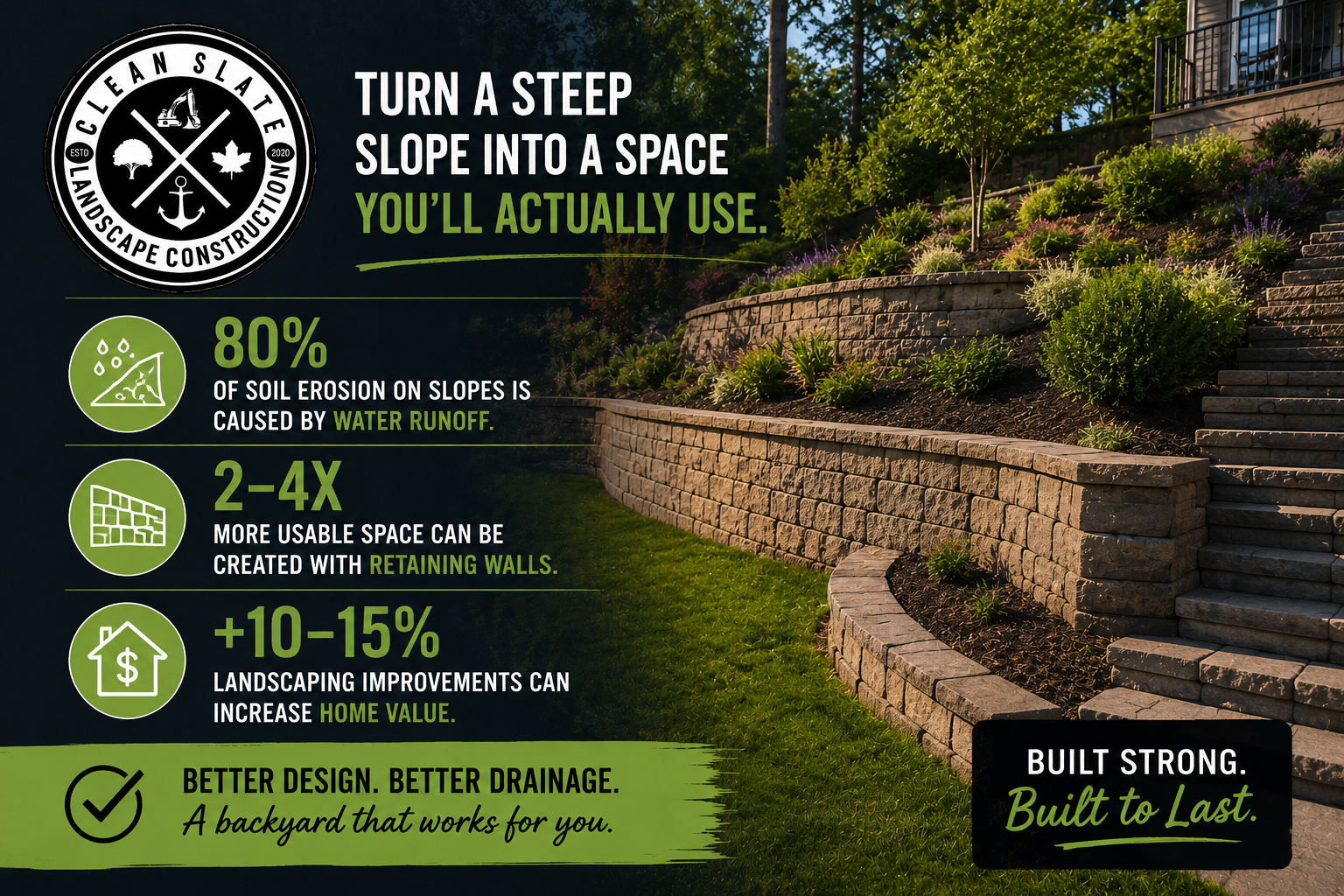
In reality, they’re often one of the most important structural components in a sloped landscape project.
A retaining wall is designed to hold soil in place while creating level areas behind or above the wall.
This accomplishes several goals simultaneously:
Creates Usable Space
The most obvious benefit is the creation of flatter areas that can be used for patios, lawns, gardens, or gathering spaces.
Helps Reduce Erosion
Retaining walls help stabilize soil that would otherwise shift or wash away over time.
Improves Drainage Management
Properly designed walls include drainage systems that help move water safely through the landscape.
Enhances Safety
Level surfaces are easier to navigate and significantly reduce slipping hazards.
For many homeowners, retaining walls become the foundation that makes an otherwise challenging backyard functional again.
A Common Success Story We See
Many homeowners contact us believing their backyard is beyond help.
They often point to years of frustration:
- Muddy conditions after every storm
- Limited play space for children
- Erosion issues
- Difficulty maintaining landscaping
- Areas of the yard that go completely unused
After evaluating the property, they frequently discover there are more options than they realized.
A project may start with a retaining wall designed to stabilize one section of the yard. That newly created level area becomes a small patio or gathering space. Over time, additional improvements expand the usable footprint of the property.
What began as a backyard people avoided becomes a space where they host cookouts, relax with family, or simply enjoy being outdoors.
The transformation isn’t just physical.
Many homeowners tell us they finally feel like they’re getting the full value and enjoyment from their property.
Creating a More Functional Outdoor Lifestyle
A flatter, safer backyard can change how people use their homes.
Instead of constantly working around limitations, homeowners gain flexibility.
That might mean:
- Installing a fire pit area
- Creating outdoor dining space
- Building garden terraces
- Adding play areas for children
- Making room for pets to roam safely
- Expanding entertainment options
A well-designed solution can help create a level sloped backyard experience where the property feels more accessible, practical, and enjoyable.
The goal isn’t necessarily to make the landscape look artificial.
The goal is to make it work better for the people who live there.
How to Know Which Solution Makes Sense
Every slope is different.
The angle of the grade, soil conditions, drainage patterns, property boundaries, and intended use all influence what approach makes the most sense.
What works perfectly for one backyard may not be the best choice for another.
That’s why professional evaluation matters.
An experienced contractor can assess:
- Soil stability
- Existing drainage
- Elevation changes
- Structural requirements
- Long-term maintenance considerations
- Budget goals
Many homeowners are surprised to learn that solutions exist that are both practical and visually appealing.
Sometimes the most challenging yards offer the greatest opportunities for creative outdoor design.
Frequently Asked Questions
Is it expensive to flatten a steep backyard?
Costs vary significantly based on the size of the slope, soil conditions, drainage requirements, and the type of solution being installed. A professional site evaluation is usually the best way to determine realistic project costs.
Do I need a retaining wall to make my backyard more usable?
Not always. Some slopes can be improved through grading and drainage work alone. However, retaining walls are often the most effective solution when significant elevation changes need to be managed.
Will a retaining wall stop erosion?
A properly designed retaining wall can significantly reduce erosion by stabilizing soil and controlling water movement. Additional drainage features may also be recommended.
How long does a retaining wall last?
The lifespan depends on materials, construction quality, drainage design, and maintenance. Professionally built retaining walls can last for decades.
Can I create a patio on a sloped backyard?
Yes. In many cases, retaining walls and grading solutions are specifically used to create level patio areas within sloped landscapes.
Is a steep backyard dangerous?
Not necessarily, but steep slopes can increase the risk of slips, falls, erosion, and maintenance-related accidents. Improving stability and accessibility can make the space safer for everyday use.
Does improving a sloped yard add property value?
Many buyers view functional outdoor living space as a valuable feature. Improvements that increase usability, safety, drainage performance, and curb appeal may positively impact overall property value.
A steep backyard can feel like a permanent problem, especially when it’s slippery, difficult to maintain, and rarely used. But many homeowners are surprised to learn that the right design approach can unlock possibilities they hadn’t considered. With thoughtful planning, structural support, and proper grading, that frustrating hillside may become one of the most attractive and functional parts of your property.
Call 888-912-6706 or visit our Retaining Wall Construction services to learn more about our Retaining Wall Construction services Cape Cod, MA.