
It didn’t start with a big plan.
It started with a quiet realization—one of those moments that’s hard to ignore once you notice it.
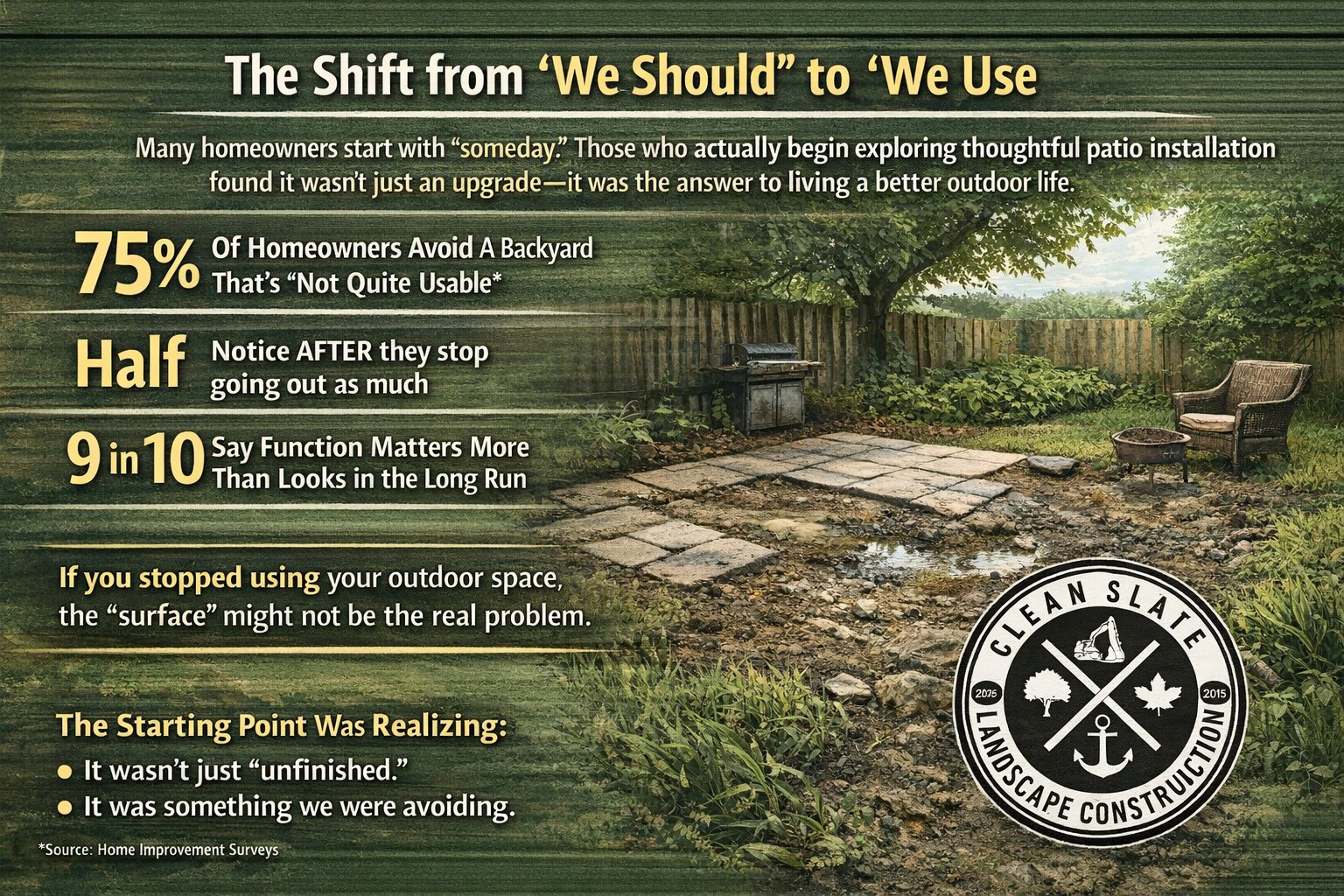
They had a backyard… but they weren’t living in it.
Not because they didn’t want to. But because something about the space just didn’t work.
If that feeling sounds familiar, you’re not alone. And if you’re starting to wonder what it would take to change that, this is where many homeowners begin exploring thoughtful patio installation—not as an upgrade, but as a real solution.
It Was Always “Something We’d Get To Later”
At first, the backyard wasn’t a problem.
It was just… unfinished.
A little uneven. Slightly muddy after rain. Not ideal, but manageable.
So it stayed low on the priority list.
They told themselves:
- “We’ll deal with it next year.”
- “Maybe just throw down some gravel.”
- “It’s not that bad.”
But over time, “not that bad” became “not worth using.”
And that shift happened slowly—until one day, they realized they had stopped going outside altogether.
The Subtle Shift From Space to Stress
The yard didn’t suddenly fall apart.
It just never improved.
After rain, it stayed soft for days. Furniture sank slightly into the ground. Walking across it required thinking about where to step.
It wasn’t unusable all the time.
But it was unpredictable enough that no one relied on it.
And that unpredictability quietly turned the space into something stressful instead of relaxing.
The Question That Finally Changed Things
The turning point came from a simple question:
“Why don’t we actually use this space?”
Not “What should we build?”
Not “What would look good?”
Just—why aren’t we using it?
And the answer wasn’t style. It wasn’t size.
It was function.
The yard didn’t support how they wanted to live.
The Rabbit Hole Most Homeowners Fall Into
Once they decided to fix it, they did what most people do.
They started researching surfaces.
Stone. Concrete. Pavers. Patterns. Colors.
Eventually, like many homeowners, they found themselves comparing pavers vs stamped concrete, trying to figure out what would hold up better and look right long-term.
But something still felt unclear.
Because every option sounded good—until you thought about your specific yard.
That’s when they realized:
They weren’t just choosing a material. They were choosing how the space would perform.
What They Almost Missed
At one point, they were ready to move forward quickly.
Pick a surface. Install it. Move on.
But a conversation changed everything.
Instead of focusing on materials, the discussion shifted to:
- How water moved through the yard
- Where the ground was weakest
- Why certain areas stayed wet longer
And suddenly, the problem made sense.
It wasn’t about what to put on top.
It was about what needed to be fixed underneath.
What Changed Once They Understood the Ground
Once the focus moved below the surface, everything else became clearer.
They learned:
- The yard needed proper grading to move water away
- The soil needed stabilization to prevent shifting
- The base had to be built to support weight and weather
Only after that did the material decision actually matter.
And this time, it wasn’t confusing.
Choosing the Right Surface—With Real Context
Now, the comparison made sense.
Instead of guessing, they understood how each option would behave in their environment.
Pavers stood out because:
- They flex slightly with ground movement
- Individual pieces can be adjusted or replaced
- They handle freeze-thaw cycles more effectively
Stamped concrete had its place too:
- Smooth, continuous appearance
- Lower initial installation cost in some cases
- Less joint maintenance
But they also understood the trade-offs.
Concrete can crack under pressure—and once it does, repair isn’t simple.
Pavers, on the other hand, allow for adjustments over time.
That flexibility mattered for their yard.
The Installation That Actually Solved the Problem
When the work started, it didn’t look like what they expected.
There were no pavers at first.
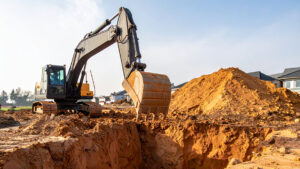
Just excavation. Layers. Compaction.
It felt slow—but intentional.
Because this time, the goal wasn’t speed.
It was stability.
The base was built. The drainage was planned. The grading was corrected.
And only then did the surface go in.
The Moment Everything Felt Different
After it was done, the change wasn’t just visual.
It was functional.
After the next rain, they walked outside—and didn’t think twice.
No soft spots. No puddles. No hesitation.
Just a space that worked.
One moment stuck with them:
“We didn’t realize how much we avoided the yard until we stopped avoiding it.”
That’s the kind of shift that’s hard to measure—but impossible to miss.
It Was Never About Making It Look Better
Looking back, they realized something important.
They hadn’t needed a prettier yard.
They needed a usable one.
The patio didn’t just improve the space—it unlocked it.
It turned something frustrating into something reliable.
And once that happened, everything else followed.
If You’re Still Deciding, This Is the Part That Matters
If you’re in the middle of comparing options, it’s easy to focus on:
- Style
- Price
- Materials
But the real decision is deeper than that.
It’s about whether the space will actually work when it’s done.
Because when the foundation, drainage, and structure are handled correctly, the surface becomes the finishing touch—not the fix.
FAQ: What Homeowners Ask Before Making the Change
How do I know if my backyard needs more than just a surface upgrade?
If your yard stays wet, uneven, or unstable after rain, the issue likely goes deeper than the surface. A proper base and drainage plan are key.
Are pavers better than stamped concrete?
It depends on your yard. Pavers offer flexibility and easier repairs, while stamped concrete provides a continuous look but can crack over time.
Will a patio fix drainage issues?
A properly designed patio can improve drainage significantly—but only if grading and water flow are addressed during installation.
What causes patios to fail over time?
Most failures come from poor base preparation, lack of compaction, or inadequate drainage—not the surface material itself.
How long does a well-built patio last?
With proper installation, patios can last decades with minimal maintenance.
Can small yards still benefit from a patio?
Absolutely. In fact, smaller spaces often benefit the most because every square foot becomes more usable.
Is this something I can install myself?
DIY can work for small projects, but for long-term performance—especially in problem areas—professional installation is strongly recommended.
You’re Closer to a Real Solution Than You Think
If you’ve been going back and forth, trying to get it right—that’s not overthinking.
That’s awareness.
Because once this is done correctly, it’s not something you have to revisit every year.
It’s done.
Ready to Turn Your Backyard Into Something You Actually Use?
You don’t need a bigger yard.
You need one that works.
Call 888-912-6706 or explore your options for patio installation to learn more about our Patio Installation services in Cape Cod.